
As businesses pivot towards a more technology-driven future, the integration of AI, CliftonStrengths®, and Leadership is crucial. Companies are expected to invest heavily in AI—Gallup initially estimated $77.6 billion in the early 2020’s—with a growth rate of 37.3%. That number is now estimated to explode to a trillion dollar investment over the next 5 years! This investment presents a significant opportunity for leaders to enhance their effectiveness and drive employee engagement.
By combining AI insights with the CliftonStrengths® framework, leaders can cultivate environments that maximize team performance and innovation. This blog explores the pros and cons of AI, its relationship with CliftonStrengths®, and effective strategies for integrating these elements into leadership.
The Pros and Cons of AI in Leadership
Pros
1. Enhanced Decision-Making: AI provides leaders with critical insights derived from vast data sets. This capability enables more informed decision-making, ultimately leading to better business outcomes.
2. Increased Efficiency: By automating routine tasks, AI allows leaders to concentrate on strategic initiatives, fostering innovation and enhancing overall productivity.
3. Personalized Employee Engagement: AI can analyze engagement metrics and tailor development plans for individual employees, ensuring that their unique Strengths are recognized and nurtured.
4. Improved Team Dynamics: AI tools can assess team interactions and performance, helping leaders identify how different Strengths can be leveraged to enhance collaboration and synergy.
Cons
1. Dependence on Technology: Relying too heavily on AI may diminish critical thinking and decision-making skills within teams. Leaders must maintain a balance between AI insights and human judgment.
2. Data Privacy Concerns: The collection and analysis of personal data can raise privacy issues, making it essential for leaders to handle information responsibly to build trust.
3. Resistance to Change: Employees may resist AI implementation out of fear or uncertainty. Leaders need to foster a culture of openness to ease these transitions.
4. Loss of Human Touch: AI lacks the emotional intelligence that human leaders bring, which can affect team morale and engagement if not managed properly.
The Intersection of CliftonStrengths® and AI
The CliftonStrengths® framework emphasizes identifying and leveraging individual and team Strengths, which can greatly enhance the effectiveness of AI initiatives in several ways:
1. Data-Driven Insights into Strengths
AI can analyze data to uncover patterns in how individual Strengths contribute to team performance. By leveraging these insights, leaders can make strategic decisions about team composition and development.
2. Personalized Development Plans
Integrating AI with CliftonStrengths® allows leaders to create tailored development strategies. AI can highlight specific areas where team members excel or need improvement, leading to a more engaged and capable workforce.
3. Enhancing Team Collaboration
AI can analyze communication patterns and team dynamics, providing leaders with the information they need to foster collaboration and resolve conflicts effectively. This ensures that diverse Strengths are utilized to their fullest potential.
Improving AI Adoption Among Employees
To achieve the productivity and innovation gains that AI promises, leaders must take intentional steps to prepare their teams. Currently, nearly seven in ten employees report never using AI in their roles, indicating that AI adoption requires more than just technological investment—it demands clear communication and robust training.
1. Clearly Communicated Plan for Integration
While 93% of CHROs say they have begun using AI in their organizations, only 33% of employees are aware of this initiative. When leaders communicate a clear plan for AI integration, employees are nearly three times more likely to feel prepared and comfortable using AI in their roles. This emphasizes the need for transparency in leadership.
2. Established Guidelines for AI Use
A significant portion of employees—70%—report that their organizations lack guidelines for using AI at work. Establishing clear policies not only empowers employees to use AI effectively but also mitigates potential security risks. Guidelines help ensure that AI serves as a tool for innovation rather than a source of confusion.
3. Training Aligned with Employees’ Roles
Almost half of workers who use AI at least annually state they have not received any formal training on its use. Providing targeted training significantly increases the likelihood of employees viewing AI as beneficial for their productivity. Leaders should prioritize training that equips employees with the necessary skills to utilize AI effectively in their roles.
Enhancing Team Dynamics with AI
AI plays a crucial role in understanding and improving team dynamics. Here’s how leaders can leverage AI to foster a more collaborative and effective team environment:
1. Predictive Analytics for Team Composition
AI can analyze historical data on team performance, collaboration patterns, and individual Strengths to recommend optimal team compositions. By assessing how different personalities and skill sets have interacted in the past, AI tools can suggest groupings that are more likely to lead to successful outcomes. This predictive capability helps leaders form teams that not only complement each other’s Strengths but also balance weaknesses.
2. Real-Time Feedback and Adjustments
AI can facilitate real-time feedback mechanisms that allow teams to continuously assess their dynamics. For example, AI-powered tools can analyze communication patterns and engagement levels during team meetings, providing leaders with insights into which team members may feel sidelined or overwhelmed. By identifying these dynamics early, leaders can make informed adjustments, ensuring that everyone remains engaged and valued.
3. Enhancing Conflict Resolution
AI can assist in conflict resolution by providing data-driven insights into team interactions. By analyzing communication history, AI can help identify the root causes of conflicts and suggest strategies for resolution based on past successful outcomes. This proactive approach not only minimizes disruptions but also fosters a culture of open communication and collaboration.
4. Identifying Collaboration Opportunities
AI tools can identify potential collaboration opportunities across different teams or departments by analyzing project data and team Strengths. For example, if one team is working on a project that requires specific skills or knowledge that another team possesses, AI can facilitate connections that lead to cross-functional collaboration. This not only enhances innovation but also builds a sense of community within the organization.
5. Supporting Remote and Hybrid Teams
In increasingly remote and hybrid work environments, AI can help maintain team cohesion. AI-driven platforms can analyze team interactions across various communication channels (like emails, chat, and video meetings) to assess collaboration levels and identify any potential silos. This analysis allows leaders to intervene and encourage more inclusive communication strategies, ensuring that remote team members feel connected and engaged.
5 Ways Leaders Can Use ChatGPT
Here are five practical applications of ChatGPT that allow leaders to focus on high-impact activities, support team growth, and drive a forward-thinking, Strengths-based approach.
1. Streamline Communication and Drafting
ChatGPT can draft emails, announcements, reports, and presentations, saving on time-consuming tasks.
Tip: Set a clear tone and objective for the draft—e.g., “Write a motivational email about Q3 goals”—to ensure the output matches the communication’s purpose.
2. Generate Ideas and Brainstorm Solutions
ChatGPT can support brainstorming sessions, providing creative solutions, new perspectives, and a range of ideas for complex issues, providing a crucial, strategic jump start.
Tip: Input specific context about the challenge or goal and ask ChatGPT for multiple options to evaluate which aligns best with your vision.
3. Provide On-Demand Learning and Skill Development
Leaders can use ChatGPT to develop training materials, summaries of industry trends, or guides on emerging topics, offering their teams easy access to knowledge and skills.
Tip: Ask ChatGPT to break down complex topics (like “AI in HR” or “Emotional Intelligence”) into bite-sized, practical steps, making learning easy and engaging for employees.
4. Enhance Decision-Making with Data Insights
ChatGPT can synthesize insights from available data (like survey responses or key performance metrics) and turn them into actionable recommendations, helping leaders make informed decisions.
Tip: Ask ChatGPT to analyze specific metrics or data categories, and request summaries or insights to prioritize key action steps.
5. Craft Personalized Coaching and Feedback
Leaders can create tailored feedback, coaching plans, or even CliftonStrengths-based recommendations, helping team members align with organizational goals while developing their unique strengths.
Tip: Input individual strengths, goals, and recent performance highlights, and ask ChatGPT to generate coaching suggestions that build on team members’ strengths.
Integrating AI, CliftonStrengths®, and Leadership
To successfully integrate AI and CliftonStrengths® into leadership practices, leaders should consider the following strategies:
1. Embrace a Coaching Mindset
Leaders should adopt a coaching approach that prioritizes team development and Strengths recognition. Using AI to identify Strengths allows leaders to provide targeted support and foster a growth-oriented environment.
2. Foster a Culture of Openness
Encouraging an open culture where employees feel comfortable discussing AI and Strengths-based development is vital. This openness can mitigate fears and foster trust as teams adapt to new technologies.
3. Leverage Data for Continuous Improvement
Utilizing AI to gather ongoing feedback on team performance can inform leadership strategies. This data-driven approach allows leaders to make timely adjustments, enhancing individual and team effectiveness.
4. Align AI Initiatives with Purpose
AI should be aligned with the organization’s mission and values. By connecting employees’ Strengths to the company’s purpose, leaders can cultivate a sense of belonging and commitment that drives engagement and innovation.
5. Invest in Training and Development
As an updated ICF (International Coach Federation) Master Certified Coach and Gallup Certified Strengths Coach, leaders should prioritize ongoing training in both AI and strengths-based coaching. This investment will equip leaders with the skills needed to navigate the complexities of the modern workplace.
Embracing the Future of Leadership: AI, CliftonStrengths®, and Leadership
The convergence of AI and CliftonStrengths® provides a powerful opportunity for leaders to enhance their effectiveness and drive employee engagement. By understanding the pros and cons of AI, leveraging insights from CliftonStrengths®, and implementing strategies that foster a culture of openness and continuous improvement, leaders can create thriving work environments.
As organizations continue to invest in AI, effective leadership will determine whether these investments translate into meaningful productivity gains. Leaders must adopt a dual focus on technology and people strategies to realize the full potential of AI in the workplace.
Ready to embrace Strengths-Based Leadership?
If you have any questions about our upcoming workshops, masterminds, or hiring me as a speaker, or coach, schedule a call with me at Ask Brent Anything.

As we enter the holiday season, I’m also offering a Holiday Special: 50% off on coaching and training packages for new clients. You’ll have to reach out directly to get your coupon code!
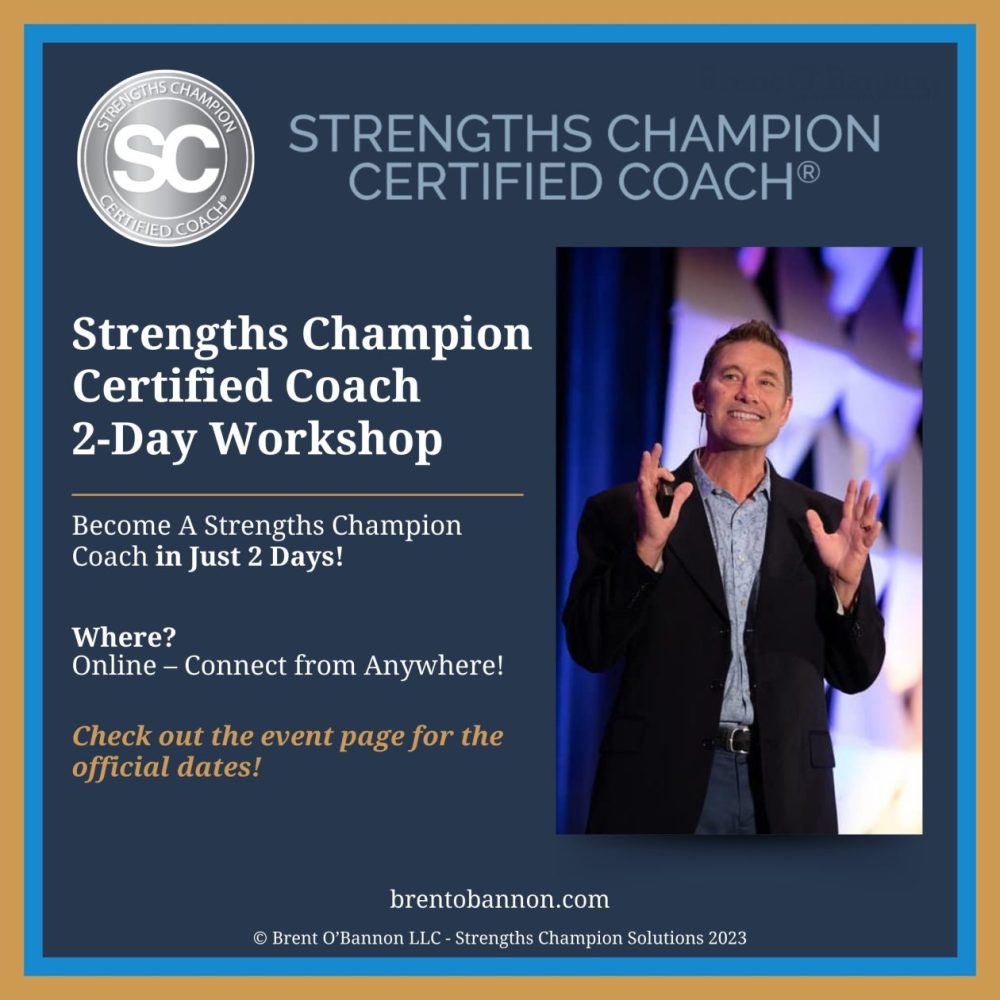
Looking to become a Strengths Champion Coach? I’m hosting an upcoming workshop December 20-21st, providing guided learning drawing from my experience as the world’s first Gallup Certified Coach! This is your gateway to the core strategies of Strengths Champion Coaching. Whether it’s strengths-based coaching, analyzing coaching models, or untangling the ICF competencies, we’ve got you covered. Sign up here!
Together, let’s harness the power of Strengths to create a more engaged and effective workplace.