
In an era where employee engagement and leadership effectiveness are crucial for organizational success, Championing Strengths-based Leadership has emerged as a game-changing approach. By focusing on individual and team Strengths, leaders can cultivate an environment that maximizes potential and drives results. This blog explores the key components of Strengths-Based Leadership and how embracing the CliftonStrengths® framework can redefine leadership expectations in today’s workplaces.
Championing Strengths-Based Leadership: The Shift from Competencies to Behaviors
Traditionally, many organizations have relied on competency models to define what makes an effective leader. However, research from Gallup reveals that these models often fail to clarify the specific behaviors that drive successful outcomes. In fact, many employees report uncertainty about their roles and expectations. According to Gallup’s findings, only 60% of employees know what’s expected of them at work, which can lead to confusion and disengagement.
To address this issue, organizations need to shift their focus from competencies to behaviors—specifically, those that contribute to performance, development, and success. Gallup identifies seven key leadership behaviors.
1. Build Relationships
Establish connections to foster trust and collaboration.
Building strong relationships is foundational to effective leadership. Leaders should prioritize creating an environment where team members feel valued and connected.
One-on-One Meetings: Schedule regular one-on-one meetings to get to know team members personally and professionally. Use this time to listen actively to their concerns and aspirations.
Team-Building Activities: Organize team-building exercises that encourage collaboration and bonding. These could range from informal gatherings to structured team challenges that require problem-solving and cooperation.
Show Vulnerability: Share personal stories and experiences to humanize your leadership. This openness can foster deeper connections and trust within the team.
2. Develop People
Help team members grow through strengths development and clear coaching.
Investing in the growth of team members not only enhances their capabilities but also boosts engagement and retention.
Individual Development Plans: Work with each team member to create a personalized development plan that aligns their strengths with organizational goals. Include specific, actionable steps for growth.
Coaching Sessions: Provide regular coaching sessions focused on leveraging individual strengths. Use these sessions to help employees navigate challenges and explore new opportunities.
Feedback Culture: Foster a culture of constructive feedback. Encourage team members to give and receive feedback regularly, focusing on how strengths can be applied to overcome obstacles.
3. Lead Change
Embrace change and align efforts with a compelling vision.
Change is inevitable in any organization, and effective leaders guide their teams through transitions with clarity and purpose.
Communicate the Vision: Clearly articulate the vision for change and how it aligns with the organization’s values. Use stories and examples to illustrate the benefits of the change.
Involve the Team: Engage team members in the change process. Seek their input and ideas, which can increase buy-in and reduce resistance to change.
Be a Role Model: Demonstrate adaptability and resilience in the face of change. Your attitude can significantly influence how your team perceives and reacts to new initiatives.
4. Inspire Others
Motivate and energize teams through positivity and recognition.
Inspiration is key to maintaining high morale and fostering a culture of enthusiasm.
Celebrate Achievements: Regularly recognize and celebrate both individual and team successes, big or small. This could be through shout-outs in meetings, team newsletters, or company-wide announcements.
Share Positive Stories: Highlight success stories that exemplify the values and strengths of the team. This not only motivates the individual involved but also inspires others.
Create a Positive Environment: Encourage positivity in the workplace. Promote a culture where team members uplift one another, creating an atmosphere of support and encouragement.
5. Think Critically
Analyze information and solve problems effectively.
Critical thinking is essential for navigating challenges and making informed decisions.
Encourage Diverse Perspectives: Foster an inclusive environment where team members feel comfortable sharing different viewpoints. This diversity can lead to more robust solutions.
Structured Problem-Solving Sessions: Implement regular brainstorming sessions where team members collaboratively analyze challenges and generate solutions. Use techniques like SWOT analysis (Strengths, Weaknesses, Opportunities, Threats) to guide discussions.
Promote a Growth Mindset: Encourage a culture where mistakes are viewed as learning opportunities. This mindset enables team members to approach problems with curiosity and creativity.
6. Communicate Clearly
Foster open dialogue and share information purposefully.
Effective communication is critical to ensuring that everyone is aligned and informed.
Set Communication Norms: Establish clear guidelines for communication within the team, including preferred channels and response times. This clarity helps streamline interactions and expectations.
Regular Updates: Provide consistent updates on team goals, projects, and organizational changes. Use various formats—meetings, emails, or collaborative platforms—to ensure information reaches everyone.
Encourage Open Dialogue: Create an environment where team members feel safe expressing their thoughts and concerns. Regularly solicit feedback and input to enhance collaboration.
7. Create Accountability
Hold oneself and others responsible for performance outcomes.
Accountability is essential for driving performance and maintaining trust within the team.
Set Clear Goals: Establish specific, measurable, achievable, relevant, and time-bound (SMART) goals for both individuals and the team. Ensure everyone understands their responsibilities and how they contribute to larger objectives.
Regular Check-Ins: Implement a system of regular progress check-ins where team members can discuss their achievements and challenges. This accountability mechanism helps keep everyone on track.
Model Accountability: As a leader, demonstrate accountability in your actions. Acknowledge your own successes and failures openly, encouraging your team to do the same.
By focusing on these seven leadership behaviors, organizations can create a robust framework for Championing Strengths-Based Leadership that not only enhances individual and team performance but also fosters a culture of engagement, trust, and collaboration.
Leveraging CliftonStrengths® for Leadership Success
At the core of Strengths-Based Leadership is the CliftonStrengths® assessment, a powerful tool developed by Gallup. This assessment helps individuals identify their top Strengths, providing a common language for personal and professional development. Research shows that individuals who understand and leverage their Strengths are, 6x more likely to be engaged at work, 7.8% more productive in their roles, and 3x as likely to experience an excellent quality of life.
These statistics highlight the tangible benefits of a Strengths-Based approach, making it an essential strategy for modern leadership.
Championing Strengths-Based Leadership: Understanding Engagement and Leadership Roles
In the realm of leadership, the adage “there may not be an ‘I’ in team, but there is an ‘I’ in disengaged” rings particularly true. As a leader, your influence directly affects the engagement levels of your team. Engagement isn’t just a buzzword; it’s a critical component of organizational culture and employee experience, and it is fundamentally linked to your leadership approach.
Focusing on Strengths for Improved Leadership
Improving your leadership begins with recognizing and leveraging what you already excel at. This is the essence of Strengths-Based Leadership. When you consciously apply your Strengths as a leader, not only do you enhance your effectiveness, but you also elevate the performance and morale of those you lead.
Gallup emphasizes that effective leadership isn’t just about identifying goals; it’s about aligning individuals to those goals while maximizing their unique talents. Great leaders know their team members’ Strengths and leverage them to achieve desired outcomes. This understanding shifts the focus away from weaknesses and fosters a culture where individuals feel valued and empowered to contribute their best.
Clarifying Leadership Roles and Expectations
Having clear expectations is essential for effective leadership. When you, as a leader, understand your role and the outcomes that need to be achieved, you can communicate those effectively to your team. This clarity fosters trust and prevents feelings of incompetence among your followers.
When team members know what is expected of them and how their Strengths contribute to the team’s goals, they are more likely to engage fully in their roles. Without this clarity, leaders may struggle to gain buy-in from their teams, which can lead to disengagement and inefficiency.
Transformation by Championing Strengths-Based Leadership
Ultimately, the journey to becoming a transformational leader involves a commitment to your Strengths and a dedication to your team’s development. By focusing on what you do best and encouraging your team to do the same, you can create an environment that thrives on collaboration and innovation.
Strengths-Based Leadership is about breaking the mold and redefining what effective leadership looks like. It’s about leading with intention, leveraging individual Strengths, and fostering a culture of engagement where everyone can succeed.
Ready to Start Championing Strengths-Based Leadership?
Championing Strengths-Based Leadership is essential for fostering employee engagement and driving performance in today’s workplace. By focusing on individual Strengths and clear behavioral expectations, leaders can cultivate an empowered and motivated workforce. The CliftonStrengths® framework provides the tools necessary for this transformation, enabling leaders to inspire their teams and achieve exceptional results.
Ready to embrace Strengths-Based Leadership?
If you have any questions about our upcoming workshops, masterminds, or hiring me as a speaker, or coach, schedule a call with me at Ask Brent Anything.

As we enter the holiday season, I’m also offering a Holiday Special: 50% off on coaching and training packages for new clients. You’ll have to reach out directly to get your coupon code!
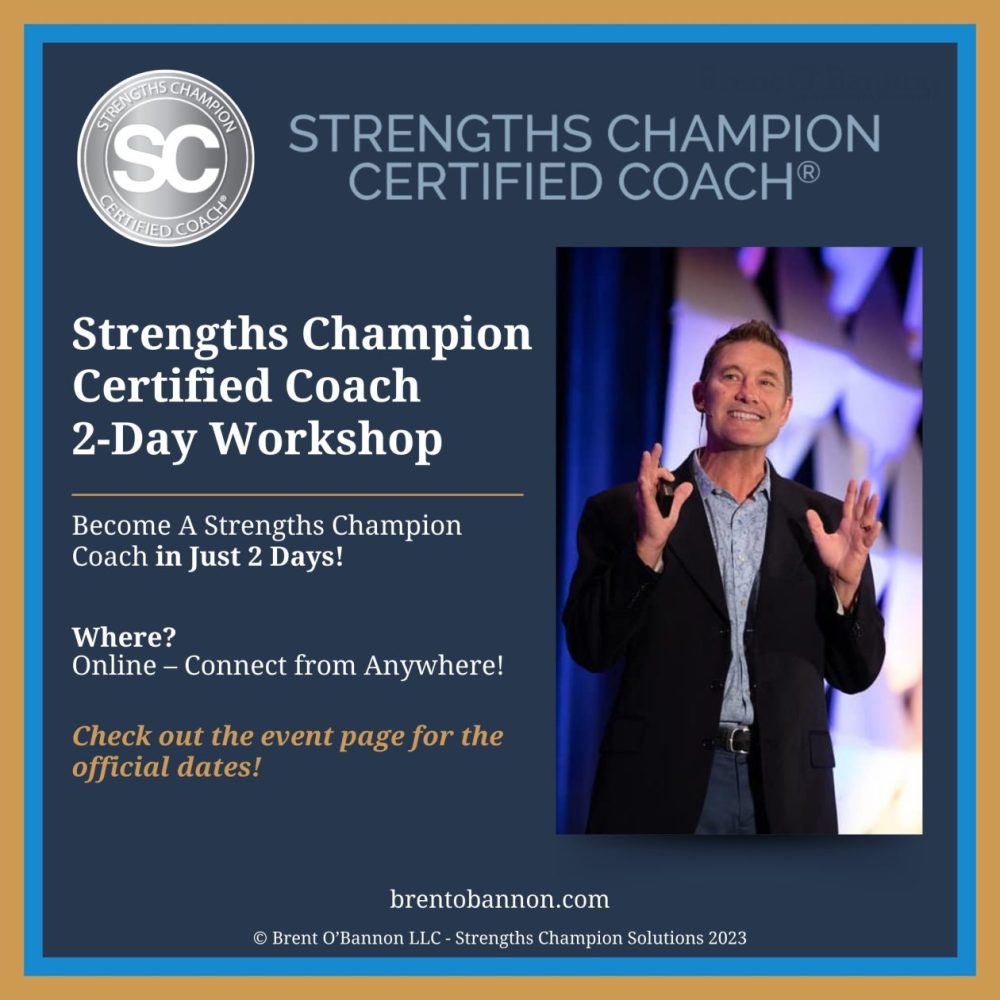
Looking to become a Strengths Champion Coach? I’m hosting an upcoming workshop December 20-21st, providing guided learning drawing from my experience as the world’s first Gallup Certified Coach! This is your gateway to the core strategies of Strengths Champion Coaching. Whether it’s strengths-based coaching, analyzing coaching models, or untangling the ICF competencies, we’ve got you covered. Sign up here!
Together, let’s harness the power of Strengths to create a more engaged and effective workplace.