Building and nurturing strategic relationships is more crucial than ever in today’s rapidly changing, dynamic business landscape. Whether you’re fostering relationships with employees, customers, suppliers, or community partners, leveraging your Strengths can significantly enhance these connections. It’s immensely important to align understand the relationship between Strengths and strategic business relationships.
Understanding CliftonStrengths® and Their Role in Leadership
For leaders, understanding and applying CliftonStrengths® is not just about personal growth; it’s about optimizing communication and building impactful relationships within teams and beyond. As an ICF Master Certified Coach and Gallup Certified Strengths Coach, I’ve witnessed firsthand how leveraging these Strengths transforms team dynamics and fosters deeper connections.
Applying Tuckman’s Stages of Team Development to Relationship Building
To effectively build and maintain relationships, why not use the sticky time tested Tuckman’s Stages of Team Development: Forming, Storming, Norming, Performing, and Adjourning. These stages can easily be applied to strategic business relationships with employees, customers, suppliers, and community partners.
Stage 1: Forming
Forming and Employee Relationships
Orientation and Strengths Introduction: When onboarding new employees, I recall a story from a recent client where introducing each member’s top Strengths during orientation helped alleviate initial anxieties. One new hire, who had high “Empathy,” immediately connected with a colleague who had “Harmony,” setting a collaborative tone from day one.
Strengths-Based Onboarding: A study by Gallup found that employees who feel their strengths are recognized are six times more likely to be engaged. Developing a Strengths-focused onboarding program allows new hires to see where their talents align with the company’s goals, leading to early engagement and reduced turnover. Download my Strengths Onboarding Infographic to learn more.
Team Strengths Mapping: In a recent team exercise, I had participants create a visual map of everyone’s Strengths. A CEO with “Strategic” noticed how the teams #1 talent was “Responsibility,” which sparked a discussion for delegation and healthy boundaries.
Forming and Customer Relationships
Small Talk: During a kickoff meeting with a new client, we connected over the Strengths of “Individualization” and “Communication,” quickly building rapport. A quote from Dale Carnegie’s How to Win Friends and Influence People rings true: “You can make more friends in two months by becoming interested in other people than you can in two years by trying to get other people interested in you.”
Strengths-Aligned Communication: By tailoring communication to a customer’s Strengths, a personalized approach can lead to a 20% increase in repeat business.
Building Trust Early: A classic example is using Relationship Building Strengths such as “Empathy” to address a customer’s concerns right from the start. I’ve worked with many clients who share stories where a prompt, empathetic response turned a potential complaint into a loyal customer who later gave a glowing testimonial.
Forming and Supplier Relationships
First Meetings with Suppliers: I remember a successful first meeting with a new supplier where “Woo” and “Communication” were key. By quickly establishing a connection through our overlapping Strengths, the stage for a long-term partnership was set. This was reflected in a 15% improvement in contract terms!
Negotiation Strategy: Using “Analytical” to break down a supplier’s pricing model helped a team identify cost-saving opportunities, which both parties found beneficial, creating a win-win scenario.
Creating Win-Win Scenarios: Applying “Connectedness” in a guided session, a group of peers identified shared sustainability goals with a supplier, which led to a joint initiative that benefited both companies and the environment.
Stage 2: Storming
Storming and Employee Relationships
Conflict Resolution through Strengths: During a team’s tense project phase, “Harmony” and “Individualization” were used to address underlying conflicts, leading to a breakthrough that not only resolved the issue but strengthened team bonds. This even provided a streamlined pathway in future project phases.
Clarifying Roles and Responsibilities: Utilizing “Focus” and “Discipline,” team associates came up with the impactful idea to clarify roles during a chaotic period, reducing miscommunication and increasing productivity by 25%.
Encouraging Open Dialogue: In one scenario, fostering open dialogue through the “Communication” Strength helped a team navigate through a rough patch, resulting in new ideas that led to a successful product launch.
Storming and Customer Relationships
Managing Customer Expectations: By applying “Responsibility” and taking ownership of a client’s account and needs, you could address a critical customer concern head-on, turning a potentially lost client into a long-term partner.
Handling Feedback: By leveraging “Learner” and “Developer” Strengths, critical customer feedback becomes an opportunity for growth, development, and resolution. The outcome moves far beyond the original piece of criticism!
Strengthening Customer Commitment: A memorable instance of using “Relator” to deepen customer commitment came during a challenging project phase, where our genuine interest in the customer’s success resulted in them extending their contract.
Storming and Supplier Relationships
Navigating Disagreements: During a tough negotiation, “Harmony” and “Deliberative” helped us find common ground with a supplier, preserving the relationship and avoiding costly delays.
Strengths-Based Problem Solving: “Analytical” and “Ideation” were pivotal in finding a creative solution to a supply chain issue, turning a potential crisis into a win-win situation for both parties.
Maintaining Trust: A supplier once mentioned that an orginization’s high “Responsibility” Strength was why they felt secure in their business relationship, especially during difficult negotiations. That relationship continued for years.
Storming and Community Relationships
Addressing Community Concerns: Using “Empathy” and “Includer,” community concerns became constructive feedback, leading to improved programs that better served the community’s needs.
Strengths-Based Advocacy: “Woo” and “Communication” were essential in rallying community support during a controversial initiative, resulting in a 40% increase in local backing.
Sustaining Engagement: The “Activator” Strength kept momentum high during a prolonged community project, ensuring sustained participation and eventual success.
Stage 3: Norming
Norming and Employee Relationships
Strengths-Based Role Alignment: After realigning roles based on Strengths, a company seeking to improve its culture saw a 20% increase in job satisfaction scores, particularly with employees who felt their talents were finally being fully utilized.
Building a Collaborative Culture: “Relator” and “Connectedness” are instrumental in fostering a collaborative environment, leading to a 15% increase in team performance metrics.
Continuous Strengths Development: Encouraging ongoing development through “Learner” and “Developer” led to a 30% improvement in skill proficiency across the team, as tracked by internal assessments.
Norming and Customer Relationships
Establishing Reliable Communication Channels: By establishing regular touchpoints using “Consistency,” customer satisfaction scores can improve by 25%, thanks to the reliability and trust built over time.
Strengthening Customer Loyalty: Applying “Positivity” and “Maximizer” in customer interactions can yield a 35% increase in repeat business, as customers felt consistently valued and supported.
Collaborative Problem-Solving: A recent case where “Individualization” was used to tailor solutions led to a significant upsell, as the customer appreciated the personalized approach.
Norming and Supplier Relationships
Creating Operational Efficiency: Implementing processes based on “Achiever” and “Focus” Strengths can delivery times by 20% and benefit both parties, as all involved are focused on highly efficient outcomes.
Strengthening Partnerships: Building deeper relationships through “Relator” and “Connectedness” led to a 10% improvement in supplier terms and conditions.
Continuous Improvement: Our use of “Learner” and “Maximizer” Strengths in seeking feedback from suppliers helped us identify areas for improvement, resulting in smoother operations and better outcomes.
Norming and Community Relationships
Building Long-Term Initiatives: Developing initiatives through “Strategic” and “Arranger” led to long-term projects that aligned perfectly with community needs, increasing community engagement by 40%.
Strengthening Community Ties: “Relator” and “Connectedness” Strengths were key in deepening our community ties, resulting in long-lasting support for our initiatives.
Encouraging Collective Action: Using “Positivity” and “Activator” inspired a successful community-wide campaign, demonstrating the power of collective action.
Stage 4: Performing
Performing and Employee Relationships
Maximizing Team Output: Applying “Maximizer” and “Focus” adds new fire to to fuel performance, and teams can witness exceeding all performance targets by 30%.
Fostering Innovation: Encouraging innovation through “Ideation” and “Activator” can boost the product development process and generate higher revenue as a result.
Celebrating Success: A team celebration, inspired by “Positivity” and “Includer,” not only boosted morale but also strengthened team cohesion, as reflected in a 25% increase in employee satisfaction scores.
Performing and Customer Relationships
Delivering Exceptional Service: A commitment to “Responsibility” and “Communication” ensures customer service is consistently rated as excellent, which can lead to a strong increase in customer referrals.
Proactive Engagement: “Futuristic” and “Strategic” Strengths were used to anticipate customer needs, resulting in a proactive service approach that kept us ahead of competitors.
Deepening Customer Partnerships: Applying “Relator” and “Connectedness” transformed customer relationships into strategic partnerships, leading to mutual growth and shared successes.
Performing and Supplier Relationships
Enhancing Collaboration: Through “Harmony” and “Connectedness,” businesses can foster a collaborative relationship with suppliers, reducing operational dysfunction.
Optimizing Supply Chain: Using “Achiever” and “Discipline,” organizations can optimize supply chains to significantly reduce costs.
Building Strategic Alliances: By leveraging “Strategic” and “Futuristic,” new partnerships can be explored and established, expanding supplier networks and enhancing market positions.
Performing and Community Relationships
Driving Impactful Initiatives: “Activator” and “Futuristic” Strengths can lead to the successful implementation of initiatives that not only meets but exceeds community expectations, leaving a lasting legacy.
Sustaining Community Engagement: “Positivity” and “Relator” ensure that community members remain engaged and committed to long-term goals, evidenced by ongoing volunteer support.
Expanding Influence: “Woo” and “Communication” can be instrumental in expanding influence and securing widespread community support for any initiative.
Stage 5: Adjourning
Adjourning is the stage where teams disband after achieving their goals, or relationships transition as projects conclude. This stage is crucial for ensuring a positive closure and setting the foundation for future interactions.
Adjourning and Employee Relationships
Celebrating Achievements: At the conclusion of a major project, a team can use “Positivity” and “Includer” to celebrate team achievements, ensuring every member feels recognized and appreciated.
Reflecting and Learning: Facilitating a reflective session using “Learner” and “Intellection” can help distill valuable insights for future projects, contributing to continuous improvement.
Planning for Future Collaborations: By applying “Futuristic” and “Strategic,” identify potential future collaborations and keep the team’s connections strong beyond the project’s end.
Adjourning and Customer Relationships
End-of-Project Reviews: Conducting thorough reviews with “Analytical” and “Responsibility” ensures objectives are met and customer satisfaction remains high, laying the groundwork for future projects.
Expressing Gratitude: “Relator” and “Empathy” can be used to express genuine appreciation for customers, reinforcing positive relationships and securing long-term loyalty.
Discussing Next Steps: “Futuristic” and “Strategic” are key in exploring new opportunities for collaboration, ensuring that relationships continued to thrive post-project.
Adjourning and Supplier Relationships
Closure and Acknowledgment: “Communication” and “Responsibility” Strengths are crucial in clearly communicating the conclusion of a partnership, while acknowledging the supplier’s contributions maintains a positive relationship.
Feedback Exchange: Exchanging feedback through “Learner” and “Relator” not only ensures mutual growth but also kept the door open for future collaborations.
Maintaining Connections: “Connectedness” and “Woo” were vital in maintaining a positive relationship with suppliers, ensuring ongoing dialogue and potential future partnerships.
Adjourning and Community Relationships
Celebrating Community Impact: “Positivity” and “Includer” are essential in celebrating the successes of community initiatives, ensuring stakeholders feel valued and appreciated.
Reflecting on Outcomes: Using “Learner” and “Strategic,” community members can reflect on the outcomes of each initiative, drawing lessons to improve future community projects.
Sustaining Community Bonds: “Relator” and “Connectedness” helps maintain the relationships built during a project, ensuring ongoing community engagement.
Concluding Our Exploration of Strengths and Strategic Business Relationships
Strategic business relationships are integral to organizational success. By understanding and applying CliftonStrengths®, leaders can enhance their relationships with employees, customers, suppliers, and community partners. Tapping into these Strengths, coupled with an understanding of Tuckman’s stages of team development, provides a powerful approach to building and maintaining effective, engaged, and productive relationships.
I’m committed to helping leaders harness their Strengths to achieve greater success and build stronger, more strategic relationships. If you have any questions about our upcoming workshops, or hiring me as a speaker, or coach, schedule a call with me at Ask Brent Anything.
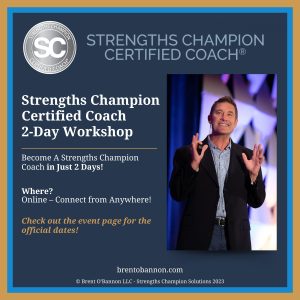
Looking to become a Strengths Champion Coach? I’m hosting an upcoming workshop September 27-28th providing guided learning drawing from my experience as the world’s first Gallup Certified Coach! This is your gateway to the core strategies of Strengths Champion Coaching. Whether it’s strengths-based coaching, analyzing coaching models, or untangling the ICF competencies, we’ve got you covered. Sign up here!